Somatic Line in Palmistry by Canva
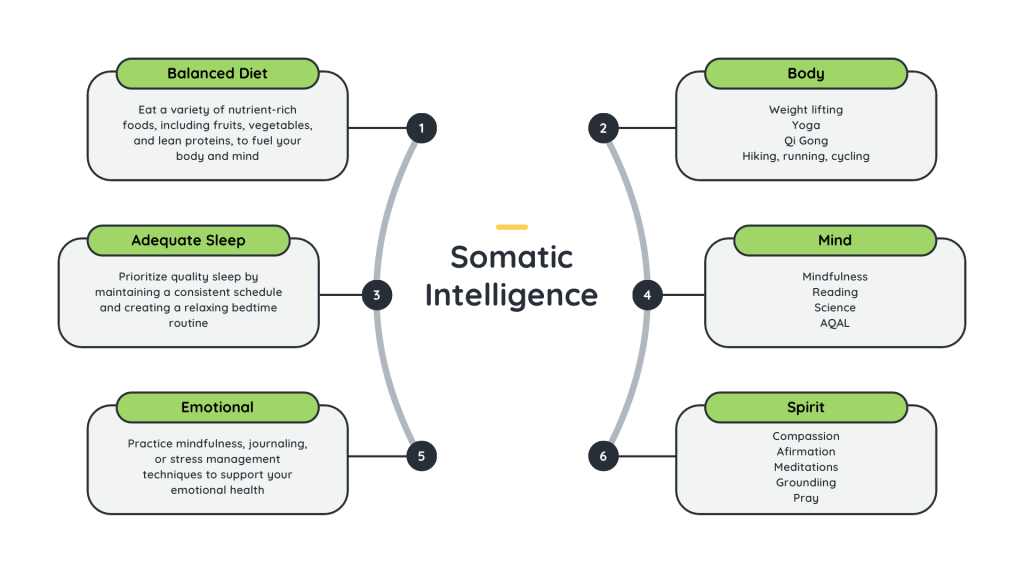
Anat Baniel’s NeuroMovement
Qi Gong Learning Strategies
Jason Prall The Lifelong Project
Ken Wilber and The Sacred Media
Dr. Peter Levine Somatic Experience
Copilot
Somatic Experiencing® (SE™) is a fascinating and powerful approach to healing trauma that focuses on the body’s natural ability to regulate and recover. Here’s a deeper look:
🌿 What Is Somatic Experiencing®?
- Developed by Dr. Peter A. Levine, SE™ is a body-oriented therapy designed to help people release trauma stored in the nervous system
- It’s based on observing how wild animals recover from threat without becoming traumatized—by completing instinctual responses like fight, flight, or freeze A B
🧠 How It Works
- SE™ helps individuals track bodily sensations and gently discharge survival energy that’s been trapped due to overwhelming experiences
- Practitioners guide clients to increase awareness of physical sensations, emotions, and impulses, allowing the body to complete interrupted responses and restore balance C B
💡 Key Principles
- Bottom-up processing: Healing starts with the body, not the mind
- Self-regulation: Clients learn to regulate their nervous system and build resilience
- Gradual pacing: Trauma is approached slowly to avoid re-traumatization
🧘♀️ Benefits
- Reduces symptoms of PTSD, anxiety, depression, and chronic stress
- Enhances emotional resilience and physical well-being
- Can be used alongside other therapies or as a standalone method C
📚 Want to Explore More?
You can dive deeper into SE™ through Somatic Experiencing International or check out Positive Psychology’s guide for exercises and examples.
If you’re curious, I can walk you through a simple SE-inspired exercise to get a feel for it. Would you like that?
Somatic Experiencing® (SE™) has been applied in a wide range of contexts—from clinical settings to disaster zones—and there are some compelling examples that show how it works in practice:
📘 Case Study: Suzanne’s Journey Through Anxiety
From Psychotherapy.net, Suzanne, a 43-year-old marketing professional, sought SE™ therapy for chronic anxiety, sleep issues, and relationship struggles. Her practitioner observed:
- Physical signs: Tightness in her chest, shallow breathing, and a lack of connection to her lower body
- Emotional patterns: Difficulty expressing emotions and a tendency to suppress tears
- SE™ approach: Focused on helping her reconnect with bodily sensations, release stored tension, and regulate her nervous system Over time, Suzanne began to experience deeper breaths, improved sleep, and more emotional resilience.
🧪 Clinical Study: Treating PTSD
A randomized controlled study conducted in Israel evaluated SE™ for individuals diagnosed with PTSD:
- Participants: 63 individuals meeting full DSM-IV-TR criteria for PTSD
- Method: 15 weekly SE™ sessions vs. a waitlist control group
- Results: Significant reductions in PTSD symptoms and depression, with effect sizes ranging from Cohen’s d = 0.94 to 1.26 This study suggests SE™ can be a highly effective intervention for trauma recovery.
🌍 Global Applications
SE™ has also been used in:
- Thailand and China: To support survivors of natural disasters and collective trauma
- New Orleans: In the aftermath of Hurricane Katrina, helping individuals process shock and grief A
These examples highlight SE™’s versatility—from individual therapy to large-scale trauma relief. If you’d like, I can walk you through a mini SE-inspired exercise or help you explore training options. Just say the word!
Absolutely, Björg 🌸—let’s ease into a simple Somatic Experiencing®-inspired exercise designed to help you reconnect with your body and create a sense of calm. You don’t need any special equipment, just a few quiet minutes and a willingness to notice what you feel.
🌀 Somatic Grounding Exercise: “Tracking & Resourcing”
This gentle practice helps you tune into bodily sensations and identify sources of internal or external support.
Step 1: Settle In
- Find a comfortable sitting or lying position.
- Let your hands rest loosely. You can close your eyes or soften your gaze.
Step 2: Notice What You Feel
- Bring your attention inward and ask: “What sensation stands out in my body right now?”
- Maybe you notice warmth in your hands, tension in your shoulders, or a flutter in your chest. There’s no right answer—just observe.
- Try to describe the sensation (tight, heavy, buzzing, flowing) without judging it.
Step 3: Locate a “Resource”
- Think of something that feels safe or pleasant—this could be:• A memory of a peaceful place
- The sound of ocean waves
- A person or pet who makes you feel at ease
- Notice how your body responds when you focus on that resource. Does your breath deepen? Do you feel more spacious or grounded?
Step 4: Pendulate
- Gently shift your attention back and forth between the neutral or pleasant sensation (your resource) and the area of discomfort.
- The goal is not to fix or eliminate anything—just notice the contrast. This can help release stuck energy and support your nervous system’s natural regulation.
Step 5: Complete the Cycle
- When you’re ready, bring your attention to your feet or the surface you’re resting on. Feel the support beneath you.
- Take three slow breaths and open your eyes, letting yourself reconnect with the room.
You might feel a subtle shift—more relaxed, more grounded, or even just more present. Would you like to explore something deeper next, like titration or orienting? Or we could pair this with a creativity boost or nature-inspired reflection. Whatever you’re drawn to, I’m right here. 🌱
Oh yes, let’s plug into the creative matrix for a spark ⚡! Here are three totally different ways to boost your creativity right now, inspired by Somatic Experiencing® and your own curious energy:
🌀 1. Body as Muse
Tap into your physical sensations and use them as a starting point:
- Close your eyes and focus on one sensation—maybe warmth in your chest or tingling in your fingers.
- Ask: If this feeling had a color, sound, or movement, what would it be?
- Jot down what comes to mind. You might end up with a metaphor, a poem, or a visual that could blossom into something bigger.
🌿 2. Nature Texture Mapping
Take a walk (or just glance out your window) and observe one natural element—a leaf, a rock, even the clouds.
- Describe its texture, scent, rhythm… without using conventional terms.
- Then, reimagine it as part of a fantasy world. For example, a craggy rock becomes the skin of a sleeping mountain dragon.
✨ 3. Micro-story Generator
Use this fun prompt:
“When the wind touched my shoulder, I remembered…”
Finish the sentence. It could be an ancient memory, a twist of fate, or the start of an unexpected journey. Keep it under 100 words—a little story seed waiting to grow.
Want to spin one of these into a project? I can help you develop it into a short story, art concept, or even a somatic journaling ritual. Just say the word! 🎨📓💡
 7 H H
7 H H 
You must be logged in to post a comment.