Emotional intelligence (EI) goes beyond simply being “good with people.” It’s a complex integration of emotional awareness, cognitive understanding, and behavioral skill that shapes how we perceive ourselves and interact with the world. Daniel Goleman’s model provides a framework for understanding how these capacities work together to influence performance, relationships, and well-being.
1. Self-Awareness
This is the foundation of emotional intelligence. It involves:
- Emotional self-awareness: Recognizing your emotional states as they happen and understanding their impact on your thoughts and behavior.
- Accurate self-assessment: Knowing your strengths and limitations without distortion.
- Self-confidence: A grounded sense of your own worth and capabilities.
Leaders with strong self-awareness can sense how their moods affect others and make conscious choices rather than reactive ones.
2. Self-Regulation
Once aware of emotions, the next step is managing them effectively. This includes:
- Self-control: Staying composed and positive under pressure.
- Trustworthiness: Acting with integrity and consistency.
- Adaptability: Adjusting to change with flexibility.
- Conscientiousness: Taking responsibility for personal performance.
Self-regulation doesn’t mean suppressing emotions—it means channeling them productively. It’s the difference between reacting impulsively and responding thoughtfully.
3. Motivation
Emotionally intelligent people are driven by internal values and goals rather than external rewards. Key aspects include:
- Achievement drive: Striving for excellence and improvement.
- Commitment: Aligning with the goals of a group or organization.
- Initiative: Taking proactive steps to seize opportunities.
- Optimism: Maintaining a positive outlook even in adversity.
This intrinsic motivation fuels resilience and sustained performance.
4. Empathy
Empathy extends emotional intelligence into the social realm. It involves:
- Understanding others: Accurately perceiving others’ feelings and perspectives.
- Developing others: Recognizing others’ needs for growth and supporting them.
- Leveraging diversity: Valuing different perspectives and experiences.
- Political awareness: Reading the emotional currents and power dynamics in a group.
Empathy allows leaders to connect authentically, build trust, and navigate complex interpersonal dynamics.
5. Social Skills
This is where emotional intelligence becomes visible in action. It includes:
- Influence: Persuading and guiding others effectively.
- Communication: Listening deeply and expressing ideas clearly.
- Conflict management: Resolving disagreements constructively.
- Leadership: Inspiring and guiding individuals and teams.
- Collaboration: Building cooperative relationships and networks.
Social skills integrate all other EI components into effective interaction and leadership.
The Deeper Layer: Integration and Practice
Emotional intelligence is not static—it develops through reflection, feedback, and practice. Neuroscience shows that emotional habits are wired into the brain but can be reshaped through mindfulness, empathy training, and intentional behavior change.
In leadership, EI creates a ripple effect: emotionally intelligent leaders foster emotionally intelligent cultures. Teams become more cohesive, communication improves, and performance rises—not because of control, but because of connection.
At its deepest level, emotional intelligence is about awareness in action—the ability to stay present, grounded, and compassionate while engaging with the complexity of human experience.
Development
Emotional Intelligence Line in Palmistry by Canva

From infant to rational from red to orange

Important factors
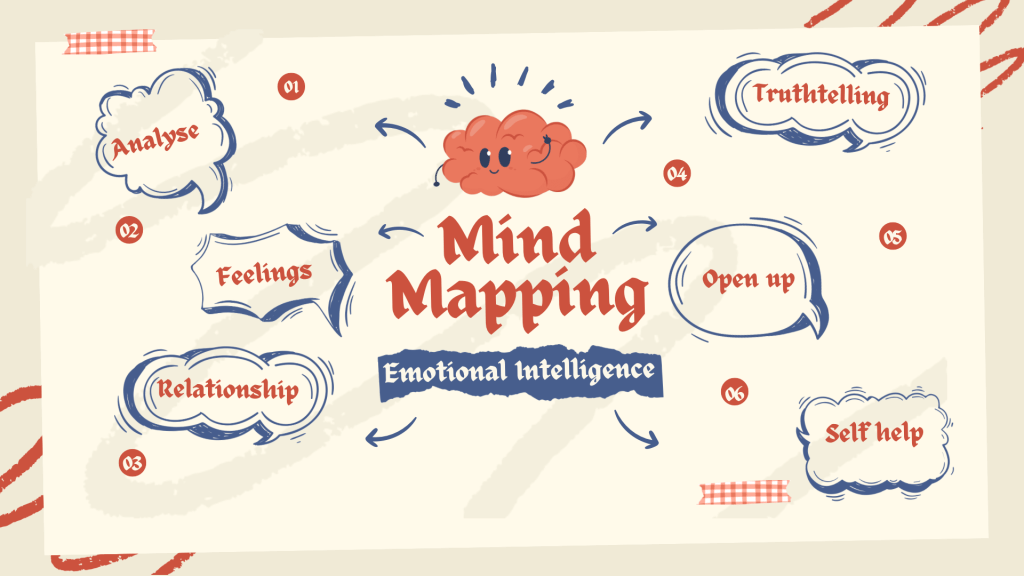
How to develop?
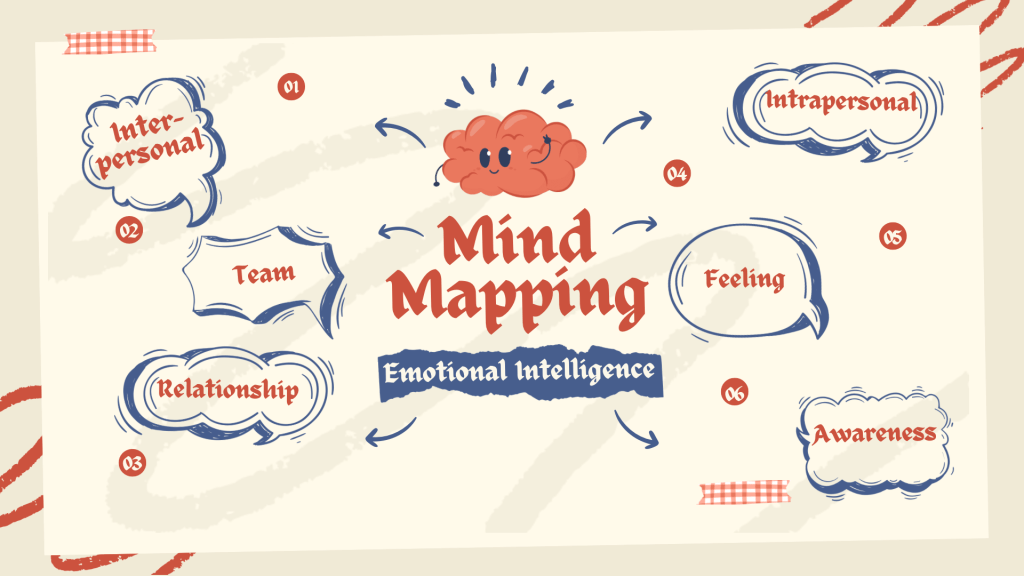
Resource
Maslow The hierarchy of needs
Ken Wilber The Development lines
Inquires, shadow work and journaling
Hugo Alberts Ph.d. The sailboat metaphor
Daniel Goleman Emotional Intelligence Map
https://www.danielgoleman.info/assessments/
And more
Here’s a developmental timeline of emotional intelligence (EI), showing how key components evolve from infancy through adolescence:
🧠 Emotional Intelligence Development Line
👶 Early Years (0–2): Building Emotional Foundations
- Begin recognizing basic emotions (joy, anger, fear)
- Seek comfort from caregivers when distressed
- Develop attachment and trust through responsive caregiving A
🧒 Preschool Years (3–5): Naming and Managing Feelings
- Learn to label emotions using words
- Start expressing feelings verbally and through play
- Begin basic emotional regulation (e.g., calming down after frustration)
- Show empathy by comforting others A B
🧑 School Age (6–8): Emotional Awareness and Control
- Understand that emotions can be complex and mixed
- Develop self-awareness and begin to reflect on emotional experiences
- Improve impulse control and coping strategies
- Form friendships and navigate social rules A
🧒 Middle Childhood (9–12): Empathy and Social Skills
- Strengthen empathy and perspective-taking
- Handle peer conflicts with negotiation and compromise
- Recognize emotional triggers and manage responses
- Develop motivation and goal-setting linked to emotional states A
🧑🎓 Early Adolescence (13+): Complex Emotional Challenges
- Navigate identity formation and emotional independence
- Manage intense emotions like shame, guilt, and romantic feelings
- Balance emotional needs with social expectations
- Build resilience and long-term emotional regulation strategies A
🌱 Key Components Across All Stages
- Self-awareness: Recognizing one’s own emotions
- Self-regulation: Managing emotional responses
- Empathy: Understanding others’ feelings
- Social skills: Building and maintaining relationships
- Motivation: Using emotions to drive positive action A C
Would you like this timeline adapted into a visual chart or used for a parenting guide, classroom resource, or personal growth plan?
Helping children develop emotional intelligence (EI) is one of the most powerful gifts you can give them—it shapes how they handle relationships, stress, and self-awareness for life. Here’s a rich mix of activities that nurture EI across its core components:
🧠 Activities to Build Emotional Intelligence in Children
- Emotion Naming Games
- Use flashcards with faces showing different emotions.
- Play “Feelings Charades” where kids act out emotions.
- Read picture books and ask, “How do you think this character feels?”
- Feelings Journals or Mood Trackers
- Encourage kids to draw or write about their emotions daily.
- Use color-coded charts (e.g., red = angry, blue = sad) to track moods.
- Role-Playing and Perspective-Taking
- Act out social scenarios like sharing toys or resolving conflicts.
- Ask, “How would you feel if you were in their shoes?”
- Mindfulness and Breathing Exercises
- Practice belly breathing or “smell the flower, blow out the candle.”
- Use guided meditations or calming music to build self-regulation.
- Gratitude and Kindness Rituals
- Create a “gratitude jar” where kids add notes about what they’re thankful for.
- Encourage random acts of kindness and reflect on how it made them feel.
- Emotionally Rich Storytelling
- Let kids invent stories with characters facing emotional challenges.
- Discuss how characters solve problems and manage feelings.
- Collaborative Games and Team Challenges
- Board games that require turn-taking, cooperation, and empathy.
- Group art projects or building tasks that foster communication and patience.
- Conflict Resolution Practice
- Use real-life disagreements as teaching moments.
- Teach “I feel” statements: “I feel upset when you take my toy without asking.”
- Praise Effort and Emotional Growth
- Celebrate when kids show empathy, patience, or courage.
- Reinforce emotional vocabulary: “That was very thoughtful of you.”
Would you like these activities tailored for a classroom setting, home routines, or a specific age group? I can also help you build a weekly EI development plan if you’re working with kids regularly.
In Worklife
One of the social skills is influence very important for top leaders who run a big organisation and of course in politics.
But influence can be used in many different situations.
Influence is a powerful social skill that enables individuals to shape others’ thoughts, behaviors, and decisions—not through force or authority, but through connection, persuasion, and trust. Here’s how influence functions as a social skill and how it can be cultivated:
🌟 What Is Influence as a Social Skill?
Influence is the ability to affect others’ actions or attitudes in a desired direction. It’s foundational in leadership, collaboration, education, and community building. Unlike manipulation, influence is rooted in authenticity, empathy, and mutual respect A.
🧠 Core Skills That Strengthen Influence
According to leadership research, four key social skills enhance your ability to influence others A:
Skill Description
Organizational Intelligence Navigating group dynamics and informal power structures to get things done.
Team Promotion Advocating for your ideas and your team’s value in a credible, authentic way.
Trust-Building Creating psychological safety and reliability, especially during change or uncertainty.
Leveraging Networks Building and activating relationships to amplify impact and support.
Sources: A
🧩 Influence in Action
Influence shows up in many social contexts:
- Conformity: Adapting behavior to fit group norms.
- Compliance: Responding to requests from peers or leaders.
- Obedience: Following directives from authority figures.
- Informational Influence: Accepting others’ input to make informed decisions B.
These dynamics are especially relevant in education, marketing, leadership, and peer learning environments C B.
🌱 Cultivating Influence in Groups and Teams
In workshops or classrooms, influence can be nurtured through:
- Cooperative learning: Students or participants model social skills for one another, creating ripple effects of growth C.
- Role modeling: Facilitators and leaders embody the behaviors they wish to see.
- Reflective dialogue: Encouraging open discussion builds trust and shared understanding.
For executives, influence is not just a social skill—it’s a strategic leadership competency that determines how effectively they can mobilize teams, shape culture, and drive organizational change. Here’s a breakdown tailored to executive-level influence:
🧭 Executive Influence: Strategic and Relational Power
Influence at the executive level is about steering long-range objectives, inspiring commitment, and aligning diverse stakeholders. It’s less about authority and more about resonance, vision, and trust.
🧠 Four Core Influence Skills for Executives
According to the Center for Creative Leadership, these are the four essential influence skills for senior leaders A:
Skill Executive Application
Organizational Intelligence Navigating power dynamics, informal networks, and decision-making processes to move initiatives forward.
Team Promotion Credibly advocating for your team’s value and aligning it with organizational goals.
Trust-Building Leading through uncertainty with transparency, empathy, and consistency.
Leveraging Networks Activating relationships across departments, industries, and communities to amplify impact.
🔑 Influence as Emotional Intelligence
Daniel Goleman highlights influence as a key emotional intelligence competency: the ability to persuade, engage, and build buy-in from key people B. Executives who lack this skill risk alienating talent and losing strategic momentum.
Example: A CEO’s failure to build buy-in for a company relocation led to mass resignations and costly rehiring. Influence isn’t just about decisions—it’s about relationships B.
🛠 Practical Ways Executives Build Influence
From Perseus Coaching’s guide C:
- Lead by Example: Demonstrate integrity, accountability, and resilience.
- Communicate Vision: Frame strategic goals in ways that inspire and unify.
- Empower Others: Delegate meaningfully and celebrate contributions.
- Adapt to Culture: Align influence tactics with organizational values and norms.
Resolve Conflicts
 7 H H
7 H H 
You must be logged in to post a comment.