Definitions
Love
Love is a deep feeling of affection, care, and connection towards someone or something. It can take many forms, including romantic love, friendship, familial love, and self-love. Love often involves empathy, compassion, and a desire for others’ happiness and well-being.
In a broader or spiritual sense, love can also mean unconditional acceptance and goodwill towards all beings, sometimes called universal love. In many traditions, love is regarded as a fundamental force that brings people together and fosters understanding, kindness, and harmony.
Compassion
Compassion is the ability to recognise others’ suffering and to feel motivated to help alleviate it. It involves empathy, understanding, and a desire to offer support or assistance to those in need.
Self-compassion
Self-compassion is the practice of treating yourself with the same kindness, understanding, and care you would show a good friend when facing difficulties, failures, or personal shortcomings. It involves recognising your own suffering, acknowledging that imperfection is part of the human experience, and responding to yourself with warmth rather than harsh self-criticism.
Self-compassion comprises three main components:
Self-kindness: Being gentle and supportive with yourself rather than judgemental.
Common humanity: Recognising that everyone makes mistakes and experiences difficulties.
Mindfulness: Noticing your pain or distress without exaggerating it or ignoring it.
Practising self-compassion can help reduce stress, increase emotional resilience, and promote a healthier, more balanced perspective on life and oneself.
Resilience
Resilience is the capacity to adapt to difficult situations, recover quickly from setbacks, and continue functioning effectively despite adversity or stress. It draws on mental, emotional, and sometimes physical strength to overcome challenges and bounce back from hardship.
Openness
Openness is the quality of being receptive to new ideas, experiences, and perspectives. It involves a willingness to consider different viewpoints, embrace change, and be transparent in one’s thoughts and communication. Openness is often associated with curiosity, flexibility, and honesty.
Awareness
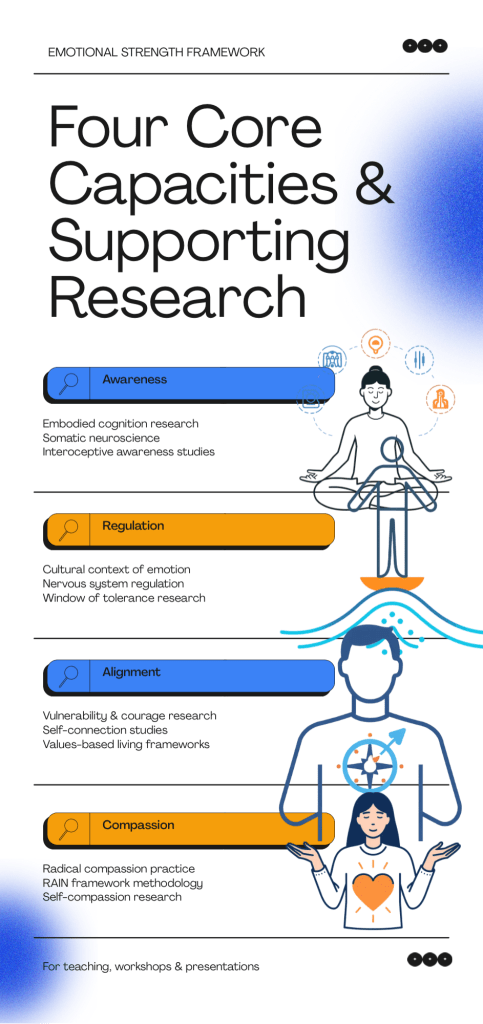
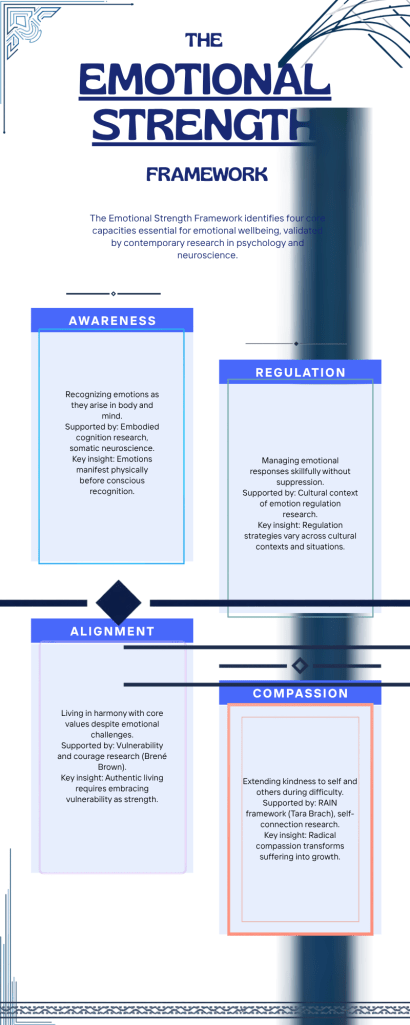
Awareness is the state of being conscious of something, such as your own thoughts, feelings, or surroundings. It involves recognising and understanding what is happening both internally (within yourself) and externally (in your environment). Awareness is essential for making informed decisions, practising mindfulness, and responding appropriately to situations.
Presence
Presence is the state of fully focusing your attention on the present moment and being mentally and emotionally engaged with what is happening now. It involves setting aside distractions and being truly “there”—whether with yourself, others, or an activity. Presence is often linked to mindfulness, active listening, and genuine connection.
Balance
Balance is the ability to maintain stability and harmony across different aspects of your life, such as work, relationships, health, and personal interests. It involves managing your time, energy, and resources so that no single area overwhelms the others. Balance promotes well-being, reduces stress, and supports a fulfilling and sustainable lifestyle.
Metta
In Buddhism, metta denotes “loving-kindness,” a quality of benevolence and goodwill towards oneself and others. It is one of the Four Immeasurables (Brahmaviharas) in Buddhist teachings. Practising metta involves cultivating an attitude of unconditional friendliness, compassion, and non-judgemental love, wishing happiness and well-being for all beings without expecting anything in return.
Metta is commonly cultivated through meditation (Metta Bhavana), in which practitioners silently repeat phrases such as “May all beings be happy, may all beings be safe, may all beings be at ease,” gradually extending these wishes from themselves to others. Meditation is traditionally practised in seated postures, though walking and other forms of meditation are also common. Over time, meditation helps cultivate qualities such as loving-kindness (metta), compassion (karuna), and equanimity (upekkha).
Mindfulness
Mindfulness is the practice of paying deliberate, non-judgemental attention to the present moment. It involves being fully aware of your thoughts, feelings, bodily sensations, and surroundings as they arise, without trying to change or avoid them.
Mindfulness is often cultivated through meditation, but it can also be practised in everyday activities, such as eating, walking, or listening. The aim is to cultivate clarity, calmness, and acceptance, which can help reduce stress, improve focus, and enhance overall well-being.
Presence, as Eckhart Tolle teaches
In Eckhart Tolle’s teachings, presence is a heightened state of awareness in which you are fully conscious of the present moment, free from the distractions of past regrets or future anxieties. Tolle emphasises that presence is the essence of who we truly are, beyond our thoughts and mental stories.
According to Tolle, being present means observing thoughts and emotions without becoming identified with them. This state of presence brings a sense of peace, clarity, and connection with life as it unfolds. Tolle often describes presence as “being”, a timeless awareness that allows us to experience life directly, without the interference of constant mental chatter.
Practising presence, in Tolle’s view, involves:
Anchoring attention in the “now” (the present moment)
Noticing when the mind drifts to the past or future and gently returning to the present
Experiencing reality without judgement or resistance
Tolle teaches that presence is the gateway to spiritual awakening and true inner freedom.
Meditation
In Buddhist terms, meditation—often called bhavana (mental cultivation) or dhyana (deep concentration)—is a central practice aimed at developing mindfulness, concentration, insight, and ultimately, awakening (enlightenment). Buddhist meditation includes a variety of techniques, but they generally fall into two broad categories:
Samatha (Calm-Abiding) Meditation:
This practice focuses on calming the mind and developing concentration (samadhi). Practitioners often concentrate on a single object, such as the breath, a mantra, or a visual image, to quiet mental distractions and rest in stillness.
Vipassana (Insight) Meditation:
This practice involves observing thoughts, sensations, and experiences with mindful awareness, aiming to see things as they truly are. Through vipassana, practitioners gain insight into the impermanent, unsatisfactory, and non-self nature of all phenomena.
Meditation in Buddhism is not just for relaxation, but is a path to wisdom (prajna), compassion, and liberation from suffering. It is traditionally practised in seated postures, though walking and other forms of meditation are also common. Over time, meditation helps cultivate qualities such as loving-kindness (metta), compassion (karuna), and equanimity (upekkha).
Emotional softening
Emotional softening refers to the process of gently allowing yourself to feel and acknowledge emotions—especially difficult ones—without resistance, judgment, or harshness. It involves letting go of emotional defences or rigid reactions (such as anger, numbness, or self-criticism) and approaching your feelings with openness, kindness, and acceptance.
This softening doesn’t mean becoming weak or passive. Instead, it means relaxing the tension around emotions so you can experience them honestly and respond with greater understanding and compassion, both toward yourself and others. Emotional softening is often encouraged through practices such as mindfulness, self-compassion, and therapy to foster healing and emotional well-being.
Emotional regulation
Emotional regulation is the ability to recognise, understand, and manage your emotions in a healthy and effective way. It involves being aware of what you are feeling, allowing those emotions to be present, and choosing how to express or respond to them rather than reacting impulsively.
Effective emotional regulation can include:
Calming yourself when upset or anxious
Expressing feelings appropriately
Shifting your mood when necessary
Coping with stress in constructive ways
Developing emotional regulation skills helps improve relationships, decision-making, and overall mental well-being. It is an important aspect of emotional intelligence and is often cultivated through mindfulness, self-awareness, and therapeutic practices.


 7hh.is
You must be logged in to post a comment.