Presentation – AQAL for Sustainability Leadership by Guðbjörg Eggertsdóttir
AQAL meta‑theory and sustainability make a surprisingly powerful pairing. When you put Ken Wilber’s Integral framework next to the challenges of ecological, social, and economic sustainability, you get a lens that exposes why so many well‑intentioned solutions fail—and how more durable ones can emerge.
AQAL in a nutshell
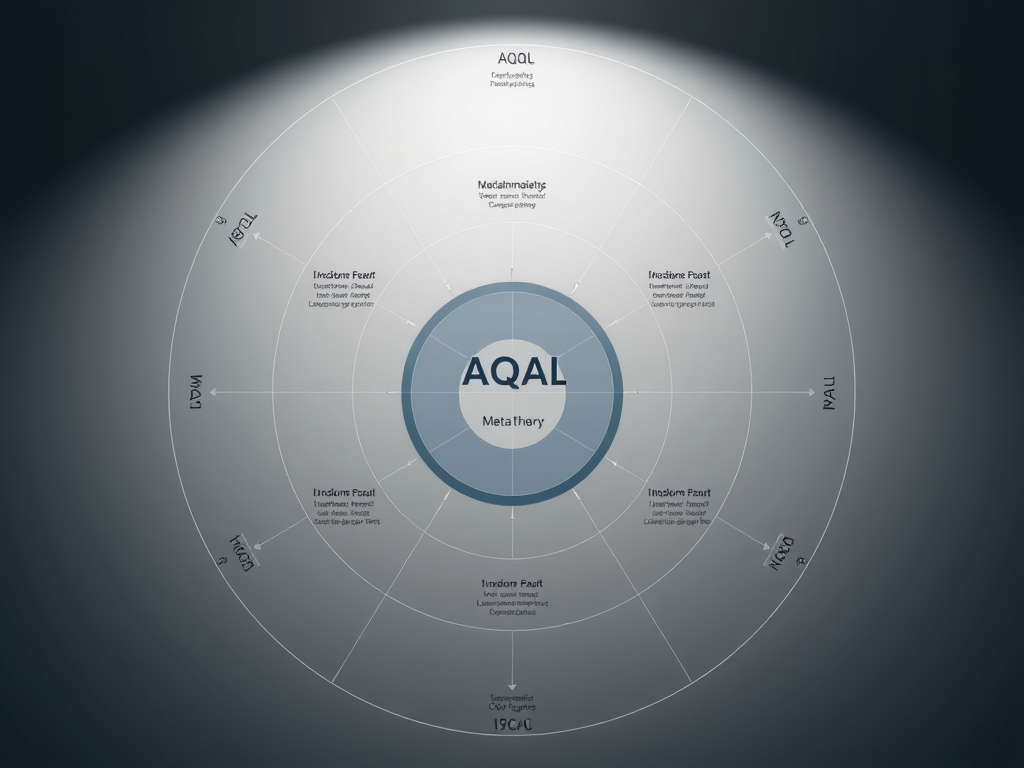
AQAL (“All Quadrants, All Levels, All Lines, All States, All Types”) is a meta‑theory that maps human experience and systems across five dimensions:
- Quadrants: interior/exterior, individual/collective
- Levels: stages of development (e.g., egocentric → ethnocentric → worldcentric)
- Lines: multiple intelligences (cognitive, moral, emotional, interpersonal, etc.)
- States: temporary states of consciousness
- Types: personality and typological differences
It’s not a theory of what to think—it’s a framework for how to think in a more complete way.
How AQAL strengthens sustainability thinking
Sustainability problems are “wicked”: complex, multi‑layered, and full of competing values. AQAL helps by ensuring that solutions address all dimensions of a system rather than just one.
1. Quadrants: The four dimensions of sustainable change
| Quadrant | Sustainability Focus | Example |
|---|---|---|
| Upper‑Left (Inner Individual) | Values, mindsets, ecological identity | Fostering environmental ethics in education |
| Upper‑Right (Outer Individual) | Behaviors, technologies, measurable impacts | Energy‑efficient appliances, carbon tracking |
| Lower‑Left (Inner Collective) | Culture, shared narratives, worldviews | Shifting from consumerism to stewardship |
| Lower‑Right (Outer Collective) | Systems, policies, infrastructure | Circular economy design, carbon pricing |
Most sustainability efforts fail because they focus on only one or two quadrants—AQAL forces a full‑spectrum approach.
2. Levels: Development matters
People and societies operate from different developmental stages.
A sustainability message that resonates at a worldcentric stage (“protect the planet for all beings”) may fall flat at an ethnocentric stage (“protect our nation’s resources”).
AQAL encourages stage‑appropriate communication and policy design.
3. Lines: Multiple competencies are needed
Sustainability requires more than technical knowledge.
It also demands moral reasoning, emotional resilience, systems thinking, and interpersonal skills.
AQAL highlights which developmental lines are strong or weak in a given context.
4. States: Access to expanded awareness
Peak experiences—whether through immersion in nature, contemplative practice, or flow states—often deepen ecological consciousness.
AQAL legitimizes these as part of sustainability work rather than treating them as “soft” or irrelevant.
5. Types: Diversity of approaches
Different personality types, cultural types, and organizational types respond to sustainability challenges differently.
AQAL helps tailor strategies to fit these differences rather than forcing one‑size‑fits‑all solutions.
What this means in practice
An AQAL‑informed sustainability initiative might include:
- Technological solutions (renewable, efficiency)
- Policy and economic redesign (circular economy, regenerative agriculture)
- Cultural transformation (storytelling, community rituals, shared values)
- Inner development (mindfulness, ecological literacy, leadership training)
It’s a “whole‑system, whole‑person” approach.
Why this matters
Sustainability isn’t just about carbon or biodiversity—it’s about consciousness, culture, behavior, and systems evolving together. AQAL gives a map for that evolution.
If you want, I can go deeper into:
- Applying AQAL to climate policy
- integral ecology
- integral leadership for sustainability
- designing an AQAL‑based sustainability program
Which direction would you like to explore next?
Climate policy becomes far more coherent—and frankly, more effective—when viewed through an AQAL lens. Most climate debates get stuck because they operate in only one or two dimensions (technology, economics, or activism), while the problem itself spans all four quadrants and multiple developmental layers. An integral approach exposes those blind spots and helps design policies that actually stick.
🌍 Climate Policy Through the AQAL Quadrants
Upper‑Right: Technologies and measurable impacts
This is where most climate policy lives today:
- Emissions standards
- Renewable energy deployment
- Carbon capture
- Efficiency regulations
- Methane monitoring
These are essential, but they only address the external individual dimension—what people and machines physically do.
Upper‑Left: Mindsets, values, and psychological drivers
Climate policy often ignores the inner dimension:
- How people perceive risk
- Identity‑based resistance to climate narratives
- Emotional responses to change
- Ecological literacy
Policies that don’t consider these factors often face backlash or apathy. AQAL reminds us that behavior change is not just technical—it’s psychological.
Lower‑Right: Systems, institutions, and economic structures
This quadrant includes:
- Carbon pricing
- Grid modernization
- Urban planning
- Transportation systems
- International agreements
These are the structural levers that shape collective behavior. Without them, individual actions remain limited.
Lower‑Left: Culture, norms, and shared meaning
This is the most neglected dimension in climate policy:
- Cultural narratives about growth, consumption, and nature
- Political identity and tribalism
- Social norms around energy use
- Community‑level climate resilience
Policies that align with cultural meaning systems spread faster and face less resistance.
📈 Developmental Levels: Why climate messaging works for some groups and fails for others
Climate communication often assumes everyone shares a worldcentric perspective (“protect the planet for all beings”). But people operate from different developmental stages:
- Egocentric: “How does this affect me?”
- Ethnocentric: “How does this affect my community or nation?”
- Worldcentric: “How does this affect humanity and the biosphere?”
- Kosmocentric: “How does this fit into the evolution of consciousness?”
AQAL‑informed policy adapts its framing to each stage rather than moralizing or shaming.
🧠 Lines of Development: Climate leadership requires more than technical skill
Effective climate policy depends on multiple intelligences:
- Cognitive: systems thinking, scientific literacy
- Moral: capacity to consider long‑term and global impacts
- Emotional: resilience in the face of uncertainty
- Interpersonal: coalition‑building across divides
AQAL helps diagnose where leaders or institutions are strong or weak.
🌱 States: Why transformative experiences matter
Temporary states—like awe in nature, contemplative practice, or crisis‑induced clarity—can shift people toward deeper ecological awareness. Climate policy rarely acknowledges this, yet these experiences often catalyze long‑term commitment.
🔄 Types: Tailoring climate policy to different groups
Different personality types, cultural types, and organizational types respond to different climate strategies. AQAL encourages pluralistic, type‑sensitive approaches rather than one‑size‑fits‑all solutions.
🧩 What an AQAL‑informed climate policy looks like
A truly integral climate policy would combine:
1. Technological and regulatory action
- Rapid decarbonization
- Electrification
- Carbon pricing
- Resilient infrastructure
2. Cultural transformation
- New narratives about prosperity and sufficiency
- Climate‑positive social norms
- Community‑based resilience practices
3. Psychological and educational development
- Climate literacy in schools
- Leadership training in systems thinking
- Programs that cultivate ecological identity
4. Economic and institutional redesign
- Circular economy models
- Regenerative agriculture
- Incentives for long‑term investment
- Governance structures that integrate science and ethics
🎯 Why AQAL matters for climate policy
Because climate change is not just a technical problem—it’s a developmental, cultural, psychological, and systemic challenge. AQAL gives policymakers a map that prevents partial solutions and encourages whole‑system design.
If you want, we can go deeper into:
- designing an AQAL‑based national climate strategy
- applying AQAL to local or municipal climate planning
- integral climate communication
- integral economics and climate finance
Which direction feels most useful to you right now?
Copilot
Integral Sustainability
When viewed through the lens of climate change, integral sustainability becomes a framework for addressing not only the physical and technological aspects of the crisis but also the psychological, cultural, and systemic roots that sustain it. Climate change is not just an environmental issue — it’s a mirror reflecting how humanity relates to itself, to others, and to the planet.
1. The Four Dimensions Applied to Climate Change
a. Inner-Individual (Mindset and Consciousness)
Climate change begins in consciousness. Our collective disconnection from nature, consumer-driven identities, and short-term thinking all contribute to ecological imbalance.
Integral sustainability invites inner transformation — cultivating mindfulness, empathy for future generations, and a sense of belonging to the Earth. Practices like meditation, reflection, and nature connection help shift from fear or denial to responsibility and care.
b. Outer-Individual (Behavior and Lifestyle)
Individual actions matter — reducing carbon footprints, choosing sustainable transport, eating plant-based diets, or supporting green innovation. But in the integral view, these actions are expressions of deeper awareness, not just moral obligations. When inner values align with outer behavior, sustainability becomes natural and joyful rather than forced.
c. Inner-Collective (Culture and Shared Meaning)
Cultural narratives shape how societies respond to climate change. A culture that glorifies consumption and growth struggles to embrace sustainability. Integral sustainability calls for new stories — of interdependence, regeneration, and stewardship. Art, education, and community dialogue can help shift collective consciousness toward a life-affirming worldview.
d. Outer-Collective (Systems and Structures)
Policies, economies, and technologies must evolve to support a low-carbon, regenerative future. This includes renewable energy systems, circular economies, and equitable governance. Yet, systemic change is most effective when it’s supported by inner and cultural transformation — otherwise, old patterns re-emerge in new forms.
2. Developmental and Systemic Integration
Climate change solutions must meet people at different developmental stages. Some respond to rules and incentives, others to shared values or global ethics. Integral sustainability designs interventions that resonate across these levels — from practical to visionary — ensuring inclusivity and long-term engagement.
It also integrates multiple intelligences:
- Cognitive — understanding climate science and systems thinking
- Emotional — processing eco-anxiety and grief
- Moral — acting from compassion and justice
- Spiritual — experiencing unity with the living Earth
3. From Mitigation to Regeneration
Integral sustainability reframes climate action from merely reducing harm to restoring balance. It encourages regenerative agriculture, rewilding, and community resilience — but also inner regeneration: healing the human–nature relationship.
4. The Core Insight
Climate change is both an outer crisis and an inner call. Integral sustainability responds to both — aligning personal transformation, cultural evolution, and systemic redesign. It asks not only how can we fix the planet? but how can we evolve as a species to live in harmony with it?
It sounds like you meant to ask, “What can we do (for good)?” — as in, what meaningful actions we can take.
From an integral sustainability perspective, doing good means acting across all dimensions — inner, outer, individual, and collective — so that our efforts are both effective and deeply rooted.
1. Inner Work (Mind and Heart)
- Cultivate awareness: Practice mindfulness, meditation, or Qi Gong to stay grounded and connected to life.
- Develop compassion: Extend empathy to people, animals, and ecosystems affected by climate change.
- Clarify purpose: Align your personal and professional goals with values that support regeneration and wellbeing.
2. Outer Action (Behavior and Lifestyle)
- Live simply: Reduce consumption, waste, and energy use. Choose quality over quantity.
- Support sustainable systems: Buy from ethical companies, invest in renewables, and advocate for circular economies.
- Engage locally: Join or start community projects — urban gardens, repair cafés, or local climate initiatives.
3. Cultural Transformation (Shared Meaning)
- Tell new stories: Share narratives of hope, resilience, and interconnection instead of fear and guilt.
- Educate and inspire: Bring sustainability into conversations, classrooms, and workplaces.
- Celebrate nature: Create rituals or events that honor the Earth and remind people of their belonging to it.
4. Systemic Change (Structures and Policies)
- Advocate for policy reform: Support leaders and laws that prioritize climate justice and ecological regeneration.
- Collaborate across sectors: Build partnerships between business, education, and community organizations.
- Design for regeneration: Shift from “less harm” to “net positive” — restoring ecosystems, not just preserving them.
5. Embody Integral Leadership
Lead by example — integrating inner clarity, compassionate relationships, and systemic awareness. When leaders embody balance of mind, body, and heart, their influence naturally ripples outward.
Doing good, in this sense, means living integrally — aligning who we are, what we do, and how we relate to the world so that every action contributes to the flourishing of life.
 7 H H
7 H H 
You must be logged in to post a comment.